You’re ready to create your next viral Reel, but you hit record and wonder: how long can this thing actually be?
The answer might surprise you.
Instagram has updated its Reels length limits, and understanding how long Instagram Reels can be could change your content strategy.
Here’s the thing. Instagram now lets you record Reels up to 20 minutes long. But just because you can doesn’t mean you should.
The sweet spot for engagement is much shorter, and knowing these nuances will help you create content that performs.
Key Takeaways
- Instagram Reels can now be recorded up to 20 minutes directly in the app’s camera interface as of late 2025
- Uploaded pre-recorded videos are limited to 3 minutes (180 seconds) for most accounts
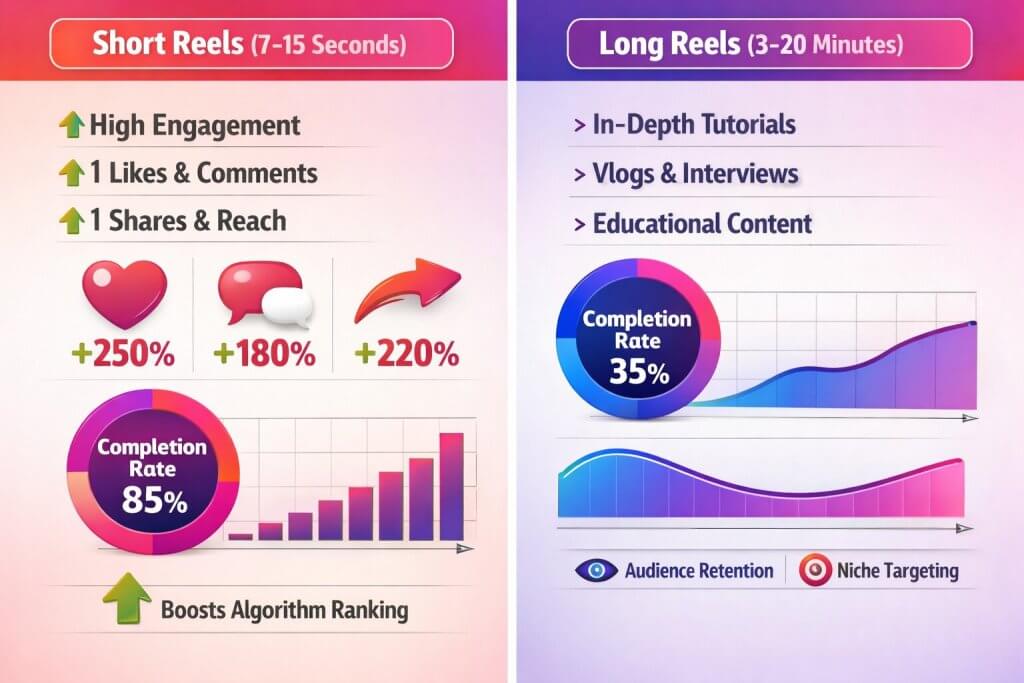
- The optimal length for maximum engagement is 7-15 seconds, with completion rates being the key metric
- Videos under 90 seconds get significantly better algorithmic reach compared to longer content
- Longer Reels aren’t penalized but require much higher retention rates to perform well in discovery feeds
How Long Can Instagram Reels Be? The Current Limits Explained
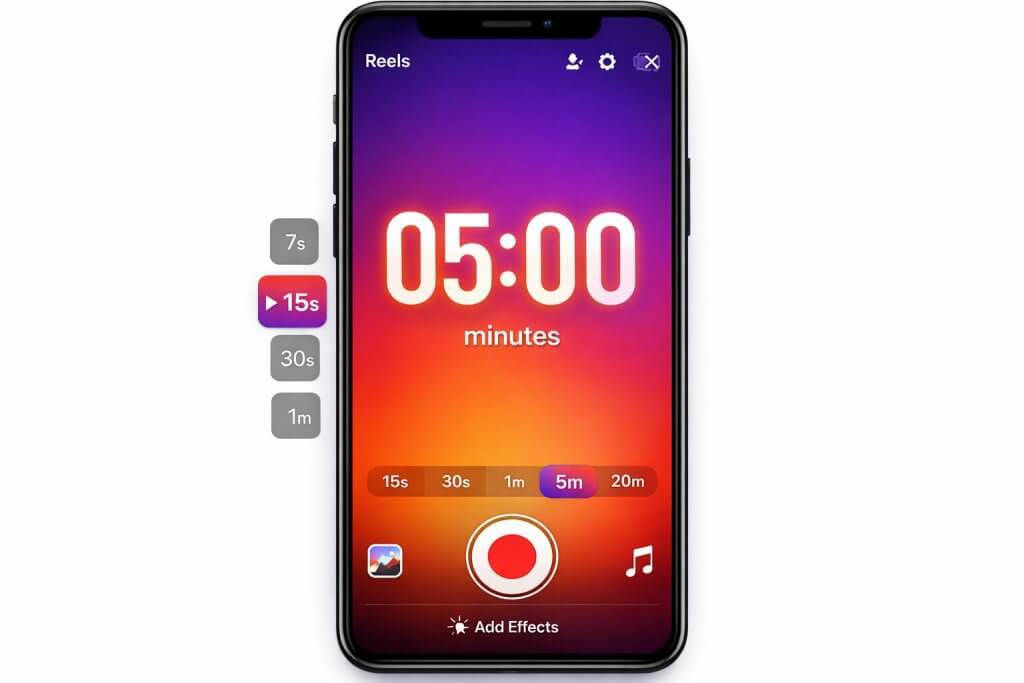
Let’s cut straight to the facts. As of 2026, Instagram offers different length limits depending on how you’re creating your Reel.
Recording directly in Instagram’s camera: You can now record Reels up to 20 minutes long]. This massive expansion rolled out in late 2025 and represents Instagram’s push to compete with longer-form video platforms.
The feature is still rolling out globally, so availability might vary based on your region and account type.
Uploading pre-recorded videos: The maximum length for uploaded content remains 3 minutes (180 seconds). This limit was confirmed as recently as January 2026 and applies to most standard accounts.
Minimum length requirement: Technically, Reels need to be at least 3 seconds long. Anything shorter won’t post.
Here’s a quick breakdown:
| Creation Method | Maximum Length | Best For |
| In-app recording | 20 minutes | Tutorials, long-form storytelling |
| Pre-recorded upload | 3 minutes | Polished, edited content |
| Optimal engagement | 7-15 seconds | Discovery and viral potential |
| Educational content | 30-45 seconds | How-tos and tips |
| Storytelling | 60-90 seconds | Narratives with retention |
The technical limits are one thing. Performance is another entirely.
What’s the Ideal Length for Instagram Reels?
Now we get to what really matters: how long should your Reels actually be?
The data is clear. Videos between 7-15 seconds consistently achieve the highest engagement rates. Why? Because they’re short enough for viewers to watch completely, and completion rate is Instagram’s most important ranking signal.

Think about it.
When someone scrolls past your Reel after 3 seconds, Instagram interprets that as “this content isn’t engaging.” But when viewers watch all the way through and maybe even replay it? That’s gold for the algorithm.
Here’s what the numbers show:
Completion rates matter more than anything else. Videos with completion rates above 85% receive 2.5 times more reach than those with lower completion rates. A 10-second Reel that everyone watches completely will outperform a 60-second Reel that most people only watch for ten seconds.
The 90-second threshold is critical. Algorithm performance drops significantly after 90 seconds. Videos under this length achieve much higher discovery potential and reach new audiences. Only 48% of viewers complete videos over 60 seconds.
Different content types have different sweet spots:
- Quick tips and hooks: 7-15 seconds
- Educational content: 30-45 seconds
- Storytelling and narratives: 60-90 seconds
- Tutorials and deep dives: 3-20 minutes (but expect lower algorithmic reach)
Instagram’s head, Adam Mosseri, has emphasized there’s no single “perfect” length. The primary goal is keeping people watching. If you’re deciding what to post on Instagram, focus on content that naturally fits shorter formats.
Why Shorter Usually Wins
Reels account for approximately 30% of user time on Instagram. The platform prioritizes content that keeps people engaged and scrolling. Shorter videos naturally have higher completion rates, which signals to Instagram that your content is valuable.
Here’s the reality: most viewers won’t commit to watching a 5-minute Reel from an account they don’t follow. But they’ll absolutely watch a punchy 12-second Reel that delivers immediate value.
That doesn’t mean longer content is dead. It just means you need to be strategic about when to use it.
When Should You Use Longer Instagram Reels?
The 20-minute recording limit opens up new possibilities, but it’s not for every situation. Longer Reels aren’t automatically penalized by the algorithm, but they need substantially higher watch-through rates to achieve the same reach as shorter content.
Best use cases for longer Reels (3-20 minutes):
✅ Evergreen tutorials that provide deep value and people will search for specifically
✅ Behind-the-scenes content for your existing audience who already follows you
✅ Educational deep dives where the topic requires more explanation
✅ Content you’ll drive traffic to yourself through Stories, bio links, or external promotion
✅ Niche expertise where engaged viewers want comprehensive information
When to avoid longer Reels:
❌ Discovery-based content meant to reach new audiences
❌ Trending audio or challenge participation
❌ Quick entertainment or scroll-stopping content
❌ When you’re trying to grow your account rapidly
Think of longer Reels as content for your existing community rather than content go grow your audience.. They work best when you already have an engaged audience who trusts your expertise and will commit to watching.
Similar to how long YouTube Shorts can be, there’s a strategic difference between maximum length and optimal length. Just because the platform allows it doesn’t mean it’s the right choice for every piece of content.
Technical Specs: How Long Can Instagram Reels Be and Other Requirements
Beyond just length, understanding the technical requirements helps ensure your Reels perform optimally.
Aspect ratio: Instagram recommends 9:16 (vertical format) at 1080×1920 pixels. While other aspect ratios are supported, vertical full-screen format gets priority in feeds and achieves better engagement. Horizontal or square videos will have black bars and take up less screen space.
File format: MP4 or MOV files work best for uploads.
Frame rate: 30 frames per second is standard, though Instagram supports various frame rates.
Audio: You can add music to your Instagram posts and Reels using Instagram’s music library or original audio. Audio is crucial for discoverability since many users search by trending sounds.
Cover image: Choose a compelling thumbnail that represents your content. This appears in grid view and can significantly impact click-through rates.
Captions and hashtags: Use a caption generator or hashtag generator to optimize discoverability. Captions are especially important since many viewers watch with sound off.
Uploading vs. Recording: What’s the Difference?
The discrepancy between recording (20 minutes) and uploading (3 minutes) limits exists because Instagram wants to encourage native content creation. Videos recorded directly in the app signal to Instagram that you’re creating original content specifically for the platform.
Pre-recorded uploads are often repurposed from other platforms, which Instagram deprioritizes. If you’re creating content specifically for Instagram, recording in-app (even if you edit first and use the upload feature) can sometimes perform better algorithmically.
You can also save your drafts to work on Reels over time before publishing.
How to Maximize Engagement Regardless of Reel Length
Whether you’re creating a 10-second hook or a 10-minute tutorial, these strategies will help your content perform better.
1. Hook viewers in the first 3 seconds. This is non-negotiable. If you don’t grab attention immediately, viewers scroll. Use text overlays, compelling visuals, or pattern interrupts to stop the scroll.
2. Optimize for watch-through rate. Structure your content so viewers want to watch until the end. Tease the payoff early, maintain pacing, and deliver on your promise.
3. Use trending audio strategically. Trending sounds boost discoverability, but only if they fit your content naturally. Don’t force it.
4. Add captions. Most people watch without sound initially. Captions ensure your message lands regardless of audio.
5. Analyze your performance. Check Instagram Insights to see which lengths perform best for your specific audience. Your 30-second tutorials might crush it while your 15-second entertainment flops or vice versa.
6. Test different lengths. Don’t assume one length works for everything. Experiment with 10-second, 30-second, and 60-second formats to see what resonates.
7. Focus on value delivery. Whether it’s entertainment, education, or inspiration, deliver clear value quickly. Respect your viewers’ time.
If you’re serious about Instagram growth and potentially looking to get monetized on Instagram, understanding these engagement principles is essential.
Creating Reels Efficiently at Any Length
Here’s the truth: creating consistent Reels content is time-consuming. Whether you’re making 15-second clips or 5-minute tutorials, the production process eats up hours.
That’s where tools like QuickVid come in. QuickVid allows you to create professional short-form videos for social media without spending hours in editing software.
You can generate engaging Reels quickly, test different lengths and formats, and maintain a consistent posting schedule without burning out.
The platform handles the heavy lifting of video creation, letting you focus on strategy and engagement. When you’re testing whether 12-second Reels or 45-second Reels work better for your audience, you need to produce volume—and QuickVid makes that possible.
Common Mistakes to Avoid with Instagram Reels Length
Mistake #1: Making Reels longer just because you can. The 20-minute limit doesn’t mean every Reel should be 20 minutes. Use the length your content actually needs.
Mistake #2: Ignoring completion rates. A 90-second Reel with 30% completion rate will underperform a 15-second Reel with 95% completion every time.
Mistake #3: Copying other platforms’ formats directly. What works on YouTube or TikTok might not translate to Instagram. Understand each platform’s unique audience expectations.
Mistake #4: Burying the value. Don’t make viewers wait 40 seconds for the payoff. Deliver value immediately and throughout.
Mistake #5: Not testing different lengths. Your audience might prefer different lengths than the general “best practices” suggest. Test and analyze.
Mistake #6: Prioritizing length over quality. A well-executed 8-second Reel beats a poorly made 60-second Reel every time.
Mastering Instagram Reels Length for Success
So, how long can Instagram Reels be? Up to 20 minutes when recording in-app, or 3 minutes when uploading pre-recorded content. But the real question isn’t about maximum length—it’s about optimal length for your goals.
For most creators and businesses, shorter Reels (7-90 seconds) will continue delivering the best results for discovery and growth. Longer Reels serve specific purposes for engaged audiences and evergreen content.
Your action steps:
- Start with shorter Reels (15-30 seconds) to test what resonates with your audience
- Track your completion rates in Instagram Insights—this is your most important metric
- Experiment with different lengths for different content types
- Use longer formats strategically for tutorials and in-depth content for existing followers
- Focus on hooks and pacing regardless of length to maximize watch-through
- Consider tools like QuickVid to maintain consistent posting without overwhelming your schedule
Remember: the best Reel length is the one that keeps your specific audience watching. Test, analyze, and optimize based on your own data rather than blindly following general rules.