Choosing between TikTok and YouTube isn’t just about picking a platform. It’s about adopting a completely different approach to content creation, audience building, and monetization.
The TikTok Vs YouTube debate has evolved beyond simple platform preference. It’s now about understanding two fundamentally different ecosystems that serve different purposes, audiences, and creator goals.
Whether you’re a marketer, influencer, or small business owner, the platform you choose will shape your entire content strategy.
Let’s break down everything you need to know to make the right choice for your situation.
Key Takeaways
- TikTok excels at viral reach and rapid growth through short-form content, while YouTube offers better long-term monetization and audience retention
- Content format dictates platform choice: TikTok requires vertical, sub-60-second videos; YouTube supports both short and long-form content
- YouTube provides higher earning potential through diverse revenue streams, but TikTok offers faster initial audience growth
- Your niche and content style should determine your platform. Educational and evergreen content thrives on YouTube, while trending and entertainment content dominates TikTok
- Cross-posting isn’t always effective because each platform requires tailored content strategies for maximum impact
Understanding the TikTok Vs YouTube Landscape
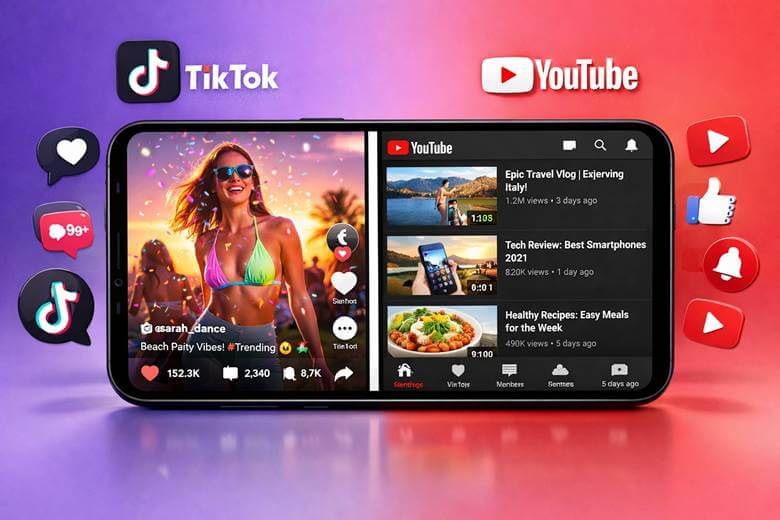
TikTok built its empire on addictive, algorithm-driven short videos. You open the app and you’re thrown into an endless scroll of content tailored to your interests. No subscriptions required. No searching necessary. The algorithm does all the work.
YouTube, on the other hand, remains the internet’s second-largest search engine. People come with intent. They’re looking for specific information, entertainment, or creators they already follow. The platform supports everything from 15-second YouTube Shorts to 12-hour livestreams.
Content Format Differences
| Feature | TikTok | YouTube |
| Primary Format | Vertical short videos (15-60 seconds) | Horizontal long-form + Shorts |
| Maximum Length | 10 minutes | 12 hours (verified accounts) |
| Aspect Ratio | 9:16 vertical | 16:9 (main), 9:16 (Shorts) |
| Content Discovery | Algorithm-driven FYP | Search + recommendations + subscriptions |
| Upload Frequency | 1-3 times daily | 1-7 times weekly |
The format difference isn’t just technical. It shapes everything about how you create content. TikTok demands quick hooks, rapid cuts, and trending audio. YouTube rewards depth, storytelling, and comprehensive coverage.
Audience Behavior
TikTok users are scrollers. They’re in discovery mode, consuming dozens of videos in a single session. The average session lasts about 52 minutes, but users might watch 100+ videos in that time.
YouTube viewers are watchers. They commit to content. A 10-minute YouTube video gets far more watch time per view than a 30-second TikTok. This difference fundamentally affects how you build an audience and generate revenue.
TikTok Vs YouTube: Growth and Reach Potential
Want to go viral overnight? TikTok’s your platform.
TikTok’s algorithm is notoriously generous to new creators. You don’t need followers to get views. A brand-new account can post its first video and reach millions if the content resonates. The platform actively pushes new content to test audience response.

YouTube’s growth is slower but more sustainable. Building a YouTube channel typically takes months or years of consistent posting. But here’s the advantage: YouTube subscribers are more valuable. They actively chose to follow you, and they’ll see your content in their subscription feed.
The Numbers Don’t Lie
On TikTok, hitting 10,000 followers might take 2-4 weeks with consistent, trending content. That same milestone on YouTube could take 3-6 months. However, those YouTube subscribers will watch more of your content over time.
TikTok engagement rates average around 5-9% for accounts under 100K followers—significantly higher than YouTube’s 2-3% average. But YouTube’s engagement is deeper: comments are longer, watch time is higher, and community bonds are stronger.
Discoverability Differences
TikTok’s For You Page (FYP) is a discovery machine. Every video gets a chance. The algorithm tests your content with a small audience, then expands reach based on performance metrics like watch time, completion rate, and engagement.
YouTube relies more heavily on:
- Search optimization (SEO matters enormously)
- Suggested videos (based on viewing history)
- Subscription feeds (loyal audience)
- Browse features (homepage recommendations)
This means your YouTube strategy needs to include keyword research, compelling thumbnails, and titles that drive clicks. TikTok? Just make engaging content and use relevant hashtags.
Monetization: Where TikTok Vs YouTube Really Diverges
Let’s talk money. 💰
YouTube crushes TikTok in monetization potential. It’s not even close.
YouTube Revenue Streams
YouTube creators can earn through:
- AdSense revenue (ads on videos)
- YouTube Premium (subscription revenue share)
- Super Chat and Super Thanks (viewer donations)
- Channel memberships (monthly subscriptions)
- Merchandise shelf (integrated product sales)
- Brand deals (sponsored content)
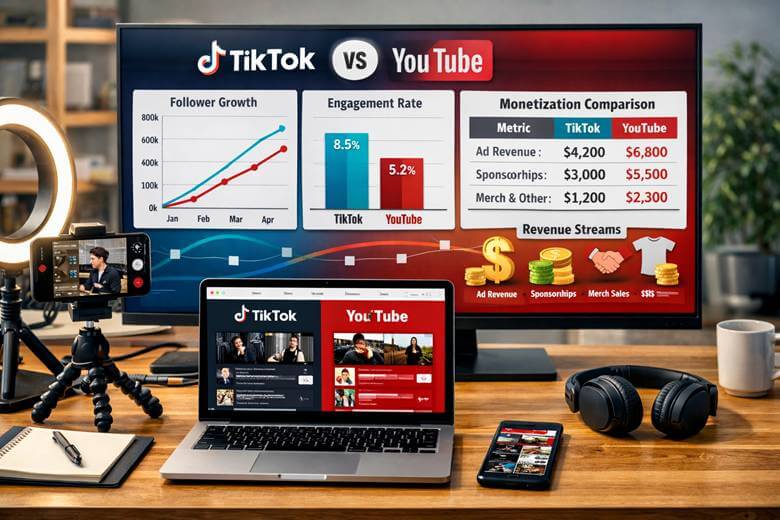
A mid-sized YouTube channel with 100,000 subscribers and consistent views can generate ,000-,000 monthly from AdSense alone. Add sponsorships, and that number doubles or triples.
TikTok Revenue Streams
TikTok’s monetization is more limited:
- Creator Fund (pays based on views, but rates are low)
- TikTok Shop (affiliate and direct sales)
- Live gifts (virtual gifts from viewers)
- Brand partnerships (the primary income source)
The TikTok Creator Fund pays roughly
Choosing between TikTok and YouTube isn't just about picking a platform. It's about adopting a completely different approach to content creation, audience building, and monetization. The TikTok Vs YouTube debate has evolved beyond simple platform preference. It's now about understanding two fundamentally different ecosystems that serve different purposes, audiences, and creator goals. Whether you're a marketer, influencer, or small business owner, the platform you choose will shape your entire content strategy. Let's break down everything you need to know to make the right choice for your situation. TikTok built its empire on addictive, algorithm-driven short videos. You open the app and you're thrown into an endless scroll of content tailored to your interests. No subscriptions required. No searching necessary. The algorithm does all the work. YouTube, on the other hand, remains the internet's second-largest search engine. People come with intent. They're looking for specific information, entertainment, or creators they already follow. The platform supports everything from 15-second YouTube Shorts to 12-hour livestreams. The format difference isn't just technical. It shapes everything about how you create content. TikTok demands quick hooks, rapid cuts, and trending audio. YouTube rewards depth, storytelling, and comprehensive coverage. TikTok users are scrollers. They're in discovery mode, consuming dozens of videos in a single session. The average session lasts about 52 minutes, but users might watch 100+ videos in that time. YouTube viewers are watchers. They commit to content. A 10-minute YouTube video gets far more watch time per view than a 30-second TikTok. This difference fundamentally affects how you build an audience and generate revenue. Want to go viral overnight? TikTok's your platform. TikTok's algorithm is notoriously generous to new creators. You don't need followers to get views. A brand-new account can post its first video and reach millions if the content resonates. The platform actively pushes new content to test audience response. YouTube's growth is slower but more sustainable. Building a YouTube channel typically takes months or years of consistent posting. But here's the advantage: YouTube subscribers are more valuable. They actively chose to follow you, and they'll see your content in their subscription feed. On TikTok, hitting 10,000 followers might take 2-4 weeks with consistent, trending content. That same milestone on YouTube could take 3-6 months. However, those YouTube subscribers will watch more of your content over time. TikTok engagement rates average around 5-9% for accounts under 100K followers—significantly higher than YouTube's 2-3% average. But YouTube's engagement is deeper: comments are longer, watch time is higher, and community bonds are stronger. TikTok's For You Page (FYP) is a discovery machine. Every video gets a chance. The algorithm tests your content with a small audience, then expands reach based on performance metrics like watch time, completion rate, and engagement. YouTube relies more heavily on: This means your YouTube strategy needs to include keyword research, compelling thumbnails, and titles that drive clicks. TikTok? Just make engaging content and use relevant hashtags. Let's talk money. 💰 YouTube crushes TikTok in monetization potential. It's not even close. YouTube creators can earn through: A mid-sized YouTube channel with 100,000 subscribers and consistent views can generate $2,000-$10,000 monthly from AdSense alone. Add sponsorships, and that number doubles or triples. TikTok's monetization is more limited: The TikTok Creator Fund pays roughly $0.02-$0.04 per 1,000 views—significantly less than YouTube's $3-$5 per 1,000 views. Most TikTok creators rely heavily on brand deals rather than platform payments. Here's a realistic comparison: 100,000 followers on TikTok: $200-$1,000/month from the platform, $500-$5,000/month from brand deals (highly variable) 100,000 subscribers on YouTube: $2,000-$8,000/month from AdSense, $2,000-$10,000/month from sponsorships YouTube's automation capabilities also make it possible to scale revenue without constantly creating new content. Evergreen videos continue generating income for years. TikTok content has a much shorter lifespan. Most videos stop getting views after 72 hours. Your content type should drive your platform choice. Pick TikTok if you're creating: TikTok rewards creators who can hook viewers in the first second and maintain attention through rapid cuts and trending audio. If you're comfortable showing your face and creating engaging short-form content, TikTok offers unmatched growth potential. The platform is perfect for building personal brands quickly. You can test dozens of content ideas weekly and see what resonates. Failed videos don't hurt your channel. Just move on to the next one. Choose YouTube for: YouTube is the superior choice for thought leadership and authority building. Long-form content allows you to demonstrate expertise in ways TikTok simply can't accommodate. Plus, YouTube's search functionality means your videos can generate views for years. A well-optimized tutorial from 2022 can still rank and drive traffic in 2026. TikTok content rarely has that longevity. Many successful creators use both platforms strategically: Tools like QuickVid make it easier to create platform-specific content without doubling your workload. You can generate TikTok-optimized videos that follow proper aspect ratios and formatting automatically. Just remember: direct cross-posting rarely works. Each platform has different expectations, and audiences can tell when content wasn't made specifically for them. Creating for TikTok versus YouTube requires different technical approaches. TikTok content is mobile-first. Most creators shoot and edit entirely on their phones. You need: The barrier to entry is incredibly low. You can create viral TikToks with just a smartphone and natural lighting. High production value isn't required. Authenticity often performs better than polish. YouTube viewers expect higher production quality, especially for certain niches. You'll typically need: However, YouTube Shorts have lowered the barrier for entry. You can start with Shorts using similar production methods as TikTok, then graduate to long-form content as you grow. Understanding YouTube Shorts aspect ratios and technical requirements helps ensure your content displays properly across all devices. Answer 5 quick questions to find your ideal platform So which platform should you choose? Ask yourself these questions: What's your primary goal? What's your content style? How much time can you invest? What's your monetization timeline? Here's what actually works: start with one platform and master it. Trying to grow both simultaneously spreads your efforts too thin. If you're a complete beginner, TikTok offers faster validation. You'll know within weeks whether your content resonates. Use that feedback to refine your approach, then expand to YouTube once you've found your voice. If you have expertise to share or prefer longer-form content, start with YouTube. The slower growth is frustrating, but the long-term payoff is worth it. You can always add TikTok later for additional reach. For businesses and brands, consider your customer journey. If you sell impulse-buy products under $50, TikTok's shopping features and viral potential make it ideal. For higher-ticket items or services requiring trust-building, YouTube's long-form content works better. Choosing between TikTok and YouTube isn't just about picking a platform. It's about adopting a completely different approach to content creation, audience building, and monetization. The TikTok Vs YouTube debate has evolved beyond simple platform preference. It's now about understanding two fundamentally different ecosystems that serve different purposes, audiences, and creator goals. Whether you're a marketer, influencer, or small business owner, the platform you choose will shape your entire content strategy. Let's break down everything you need to know to make the right choice for your situation. TikTok built its empire on addictive, algorithm-driven short videos. You open the app and you're thrown into an endless scroll of content tailored to your interests. No subscriptions required. No searching necessary. The algorithm does all the work. YouTube, on the other hand, remains the internet's second-largest search engine. People come with intent. They're looking for specific information, entertainment, or creators they already follow. The platform supports everything from 15-second YouTube Shorts to 12-hour livestreams. The format difference isn't just technical. It shapes everything about how you create content. TikTok demands quick hooks, rapid cuts, and trending audio. YouTube rewards depth, storytelling, and comprehensive coverage. TikTok users are scrollers. They're in discovery mode, consuming dozens of videos in a single session. The average session lasts about 52 minutes, but users might watch 100+ videos in that time. YouTube viewers are watchers. They commit to content. A 10-minute YouTube video gets far more watch time per view than a 30-second TikTok. This difference fundamentally affects how you build an audience and generate revenue. Want to go viral overnight? TikTok's your platform. TikTok's algorithm is notoriously generous to new creators. You don't need followers to get views. A brand-new account can post its first video and reach millions if the content resonates. The platform actively pushes new content to test audience response. YouTube's growth is slower but more sustainable. Building a YouTube channel typically takes months or years of consistent posting. But here's the advantage: YouTube subscribers are more valuable. They actively chose to follow you, and they'll see your content in their subscription feed. On TikTok, hitting 10,000 followers might take 2-4 weeks with consistent, trending content. That same milestone on YouTube could take 3-6 months. However, those YouTube subscribers will watch more of your content over time. TikTok engagement rates average around 5-9% for accounts under 100K followers—significantly higher than YouTube's 2-3% average. But YouTube's engagement is deeper: comments are longer, watch time is higher, and community bonds are stronger. TikTok's For You Page (FYP) is a discovery machine. Every video gets a chance. The algorithm tests your content with a small audience, then expands reach based on performance metrics like watch time, completion rate, and engagement. YouTube relies more heavily on: This means your YouTube strategy needs to include keyword research, compelling thumbnails, and titles that drive clicks. TikTok? Just make engaging content and use relevant hashtags. Let's talk money. 💰 YouTube crushes TikTok in monetization potential. It's not even close. YouTube creators can earn through: A mid-sized YouTube channel with 100,000 subscribers and consistent views can generate $2,000-$10,000 monthly from AdSense alone. Add sponsorships, and that number doubles or triples. TikTok's monetization is more limited: The TikTok Creator Fund pays roughly $0.02-$0.04 per 1,000 views—significantly less than YouTube's $3-$5 per 1,000 views. Most TikTok creators rely heavily on brand deals rather than platform payments. Here's a realistic comparison: 100,000 followers on TikTok: $200-$1,000/month from the platform, $500-$5,000/month from brand deals (highly variable) 100,000 subscribers on YouTube: $2,000-$8,000/month from AdSense, $2,000-$10,000/month from sponsorships YouTube's automation capabilities also make it possible to scale revenue without constantly creating new content. Evergreen videos continue generating income for years. TikTok content has a much shorter lifespan. Most videos stop getting views after 72 hours. Your content type should drive your platform choice. Pick TikTok if you're creating: TikTok rewards creators who can hook viewers in the first second and maintain attention through rapid cuts and trending audio. If you're comfortable showing your face and creating engaging short-form content, TikTok offers unmatched growth potential. The platform is perfect for building personal brands quickly. You can test dozens of content ideas weekly and see what resonates. Failed videos don't hurt your channel. Just move on to the next one. Choose YouTube for: YouTube is the superior choice for thought leadership and authority building. Long-form content allows you to demonstrate expertise in ways TikTok simply can't accommodate. Plus, YouTube's search functionality means your videos can generate views for years. A well-optimized tutorial from 2022 can still rank and drive traffic in 2026. TikTok content rarely has that longevity. Many successful creators use both platforms strategically: Tools like QuickVid make it easier to create platform-specific content without doubling your workload. You can generate TikTok-optimized videos that follow proper aspect ratios and formatting automatically. Just remember: direct cross-posting rarely works. Each platform has different expectations, and audiences can tell when content wasn't made specifically for them. Creating for TikTok versus YouTube requires different technical approaches. TikTok content is mobile-first. Most creators shoot and edit entirely on their phones. You need: The barrier to entry is incredibly low. You can create viral TikToks with just a smartphone and natural lighting. High production value isn't required. Authenticity often performs better than polish. YouTube viewers expect higher production quality, especially for certain niches. You'll typically need: However, YouTube Shorts have lowered the barrier for entry. You can start with Shorts using similar production methods as TikTok, then graduate to long-form content as you grow. Understanding YouTube Shorts aspect ratios and technical requirements helps ensure your content displays properly across all devices. Answer 5 quick questions to find your ideal platform So which platform should you choose? Ask yourself these questions: What's your primary goal? What's your content style? How much time can you invest? What's your monetization timeline? Here's what actually works: start with one platform and master it. Trying to grow both simultaneously spreads your efforts too thin. If you're a complete beginner, TikTok offers faster validation. You'll know within weeks whether your content resonates. Use that feedback to refine your approach, then expand to YouTube once you've found your voice. If you have expertise to share or prefer longer-form content, start with YouTube. The slower growth is frustrating, but the long-term payoff is worth it. You can always add TikTok later for additional reach. For businesses and brands, consider your customer journey. If you sell impulse-buy products under $50, TikTok's shopping features and viral potential make it ideal. For higher-ticket items or services requiring trust-building, YouTube's long-form content works better.Key Takeaways
Understanding the TikTok Vs YouTube Landscape
Content Format Differences
Feature TikTok YouTube Primary Format Vertical short videos (15-60 seconds) Horizontal long-form + Shorts Maximum Length 10 minutes 12 hours (verified accounts) Aspect Ratio 9:16 vertical 16:9 (main), 9:16 (Shorts) Content Discovery Algorithm-driven FYP Search + recommendations + subscriptions Upload Frequency 1-3 times daily 1-7 times weekly Audience Behavior
TikTok Vs YouTube: Growth and Reach Potential
The Numbers Don't Lie
Discoverability Differences
Monetization: Where TikTok Vs YouTube Really Diverges
YouTube Revenue Streams
TikTok Revenue Streams
The Real Earning Potential
Content Strategy: Choosing Between TikTok Vs YouTube
When to Choose TikTok
When to Choose YouTube
The Hybrid Approach
Technical Considerations: TikTok Vs YouTube Production
TikTok Production Requirements
YouTube Production Requirements
Making Your Decision: TikTok Vs YouTube for Your Goals
🎯 Which Platform Is Right for You?
Key Takeaways
Understanding the TikTok Vs YouTube Landscape
Content Format Differences
Feature TikTok YouTube Primary Format Vertical short videos (15-60 seconds) Horizontal long-form + Shorts Maximum Length 10 minutes 12 hours (verified accounts) Aspect Ratio 9:16 vertical 16:9 (main), 9:16 (Shorts) Content Discovery Algorithm-driven FYP Search + recommendations + subscriptions Upload Frequency 1-3 times daily 1-7 times weekly Audience Behavior
TikTok Vs YouTube: Growth and Reach Potential
The Numbers Don't Lie
Discoverability Differences
Monetization: Where TikTok Vs YouTube Really Diverges
YouTube Revenue Streams
TikTok Revenue Streams
The Real Earning Potential
Content Strategy: Choosing Between TikTok Vs YouTube
When to Choose TikTok
When to Choose YouTube
The Hybrid Approach
Technical Considerations: TikTok Vs YouTube Production
TikTok Production Requirements
YouTube Production Requirements
Making Your Decision: TikTok Vs YouTube for Your Goals
🎯 Which Platform Is Right for You?
The Real Earning Potential
Here’s a realistic comparison:
100,000 followers on TikTok: 0-,000/month from the platform, 0-,000/month from brand deals (highly variable)
100,000 subscribers on YouTube: ,000-,000/month from AdSense, ,000-,000/month from sponsorships
YouTube’s automation capabilities also make it possible to scale revenue without constantly creating new content. Evergreen videos continue generating income for years. TikTok content has a much shorter lifespan. Most videos stop getting views after 72 hours.
Content Strategy: Choosing Between TikTok Vs YouTube
Your content type should drive your platform choice.
When to Choose TikTok
Pick TikTok if you’re creating:
- Trending entertainment content (dances, challenges, memes)
- Quick tips and hacks (under 60 seconds)
- Behind-the-scenes snippets
- Product demonstrations (especially for e-commerce)
- Personality-driven content (comedy, reactions)
TikTok rewards creators who can hook viewers in the first second and maintain attention through rapid cuts and trending audio. If you’re comfortable showing your face and creating engaging short-form content, TikTok offers unmatched growth potential.
The platform is perfect for building personal brands quickly. You can test dozens of content ideas weekly and see what resonates. Failed videos don’t hurt your channel. Just move on to the next one.
When to Choose YouTube
Choose YouTube for:
- Educational content (tutorials, courses, how-tos)
- In-depth reviews (products, services, experiences)
- Storytelling (vlogs, documentaries, narratives)
- Evergreen content (content that stays relevant for years)
- Faceless content (voiceover, screen recordings, animations)
YouTube is the superior choice for thought leadership and authority building. Long-form content allows you to demonstrate expertise in ways TikTok simply can’t accommodate.
Plus, YouTube’s search functionality means your videos can generate views for years. A well-optimized tutorial from 2022 can still rank and drive traffic in 2026. TikTok content rarely has that longevity.
The Hybrid Approach
Many successful creators use both platforms strategically:
- Create comprehensive content for YouTube
- Repurpose highlights and clips for TikTok
- Use TikTok for audience discovery and YouTube for monetization
- Cross-promote between platforms
Tools like QuickVid make it easier to create platform-specific content without doubling your workload. You can generate TikTok-optimized videos that follow proper aspect ratios and formatting automatically.
Just remember: direct cross-posting rarely works. Each platform has different expectations, and audiences can tell when content wasn’t made specifically for them.
Technical Considerations: TikTok Vs YouTube Production
Creating for TikTok versus YouTube requires different technical approaches.
TikTok Production Requirements
TikTok content is mobile-first. Most creators shoot and edit entirely on their phones. You need:
- Vertical video (9:16 aspect ratio)
- Strong opening hook (first 1-2 seconds)
- Trending audio (using popular sounds boosts reach)
- Text overlays (many watch without sound)
- Quick cuts (maintain attention)
The barrier to entry is incredibly low. You can create viral TikToks with just a smartphone and natural lighting. High production value isn’t required. Authenticity often performs better than polish.
YouTube Production Requirements
YouTube viewers expect higher production quality, especially for certain niches. You’ll typically need:
- Better audio quality (viewers tolerate bad video before bad audio)
- Proper lighting (especially for talking-head content)
- Thumbnail creation (crucial for clicks)
- Video editing software (for longer content)
- SEO optimization (titles, descriptions, tags)
However, YouTube Shorts have lowered the barrier for entry. You can start with Shorts using similar production methods as TikTok, then graduate to long-form content as you grow. Understanding YouTube Shorts aspect ratios and technical requirements helps ensure your content displays properly across all devices.
Making Your Decision: TikTok Vs YouTube for Your Goals
🎯 Which Platform Is Right for You?
Answer 5 quick questions to find your ideal platform
So which platform should you choose?
Ask yourself these questions:
What’s your primary goal?
- Quick audience growth → TikTok
- Long-term revenue → YouTube
- Brand awareness → TikTok
- Thought leadership → YouTube
What’s your content style?
- Quick, trendy, entertaining → TikTok
- Educational, in-depth, evergreen → YouTube
- Personality-driven → TikTok
- Information-driven → YouTube
How much time can you invest?
- Limited time, need quick results → TikTok
- Can commit to long-term strategy → YouTube
- Want passive income potential → YouTube
- Enjoy daily content creation → TikTok
What’s your monetization timeline?
- Need income within months → YouTube (if you can meet requirements)
- Willing to build brand deals first → TikTok
- Want multiple revenue streams → YouTube
- Focused on product sales → TikTok (TikTok Shop)
Here’s what actually works: start with one platform and master it. Trying to grow both simultaneously spreads your efforts too thin.
If you’re a complete beginner, TikTok offers faster validation. You’ll know within weeks whether your content resonates. Use that feedback to refine your approach, then expand to YouTube once you’ve found your voice.
If you have expertise to share or prefer longer-form content, start with YouTube. The slower growth is frustrating, but the long-term payoff is worth it. You can always add TikTok later for additional reach.
For businesses and brands, consider your customer journey. If you sell impulse-buy products under , TikTok’s shopping features and viral potential make it ideal. For higher-ticket items or services requiring trust-building, YouTube’s long-form content works better.