You’ve got three seconds.
Maybe less.
That’s all the time you have to grab someone’s attention before they scroll past your content.
Use that time poorly and they’ll forget you ever existed.
Social media moves fast.
Millions of videos compete for eyeballs every single day. Social media hooks aren’t just nice to have. They’re absolutely essential.
A hook is that opening punch, the first 1-3 seconds of your content that either makes someone stop scrolling or keeps them moving.
Whether you’re creating short-form videos on TikTok, posting carousels on Instagram, or sharing insights on LinkedIn, mastering the art of the hook will transform your engagement rates.
This guide breaks down everything you need to know about crafting social media hooks that actually work.
Key Takeaways
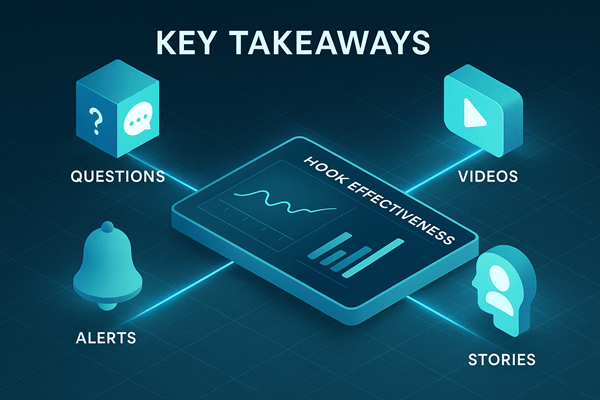
- Social media hooks capture attention in 1-3 seconds and determine whether viewers stop scrolling or keep moving past your content
- Four main hook types work across platforms: relatable hooks that mirror experiences, statement hooks that shock or intrigue, question hooks that prompt engagement, and visual hooks that captivate immediately. These can be further broken down into different categories.
- Platform-specific strategies matter: LinkedIn hooks live in the first two lines, TikTok hooks need visual + audio impact in 3 seconds, Instagram requires punchy opening captions
- Proven formulas increase success: curiosity gaps, specific numbers, pain point addressing, FOMO triggers, and identity-based targeting all boost hook performance
- Testing and iteration are crucial: what works for one audience or platform may flop elsewhere, so track metrics and refine your approach continuously
What Exactly Is a Social Media Hook?
Let’s start with the basics.
A social media hook is a strategic opening element designed to capture your audience’s attention within the first few seconds of viewing your content.
It’s the bait that gets people to bite. The magnet that pulls them in.
Think of it like the opening line of a great story or the first few notes of a catchy song. If it doesn’t grab you immediately, you’re probably not sticking around for the rest.
Why Hooks Matter More Than Ever
The average person scrolls through hundreds, sometimes thousands, of pieces of content every day.
Their attention span?
Short.
But that’s only true for content that doesn’t interest them. You’re competing against an endless feed of entertainment, information, and distraction.
Without a strong hook, your content is invisible.
Even if you’ve created the most valuable, well-produced video or post, it won’t matter if nobody stops to watch it. The hook is what separates content that gets seen from content that gets buried.
For creators using platforms like QuickVid to produce short-form video content, understanding hooks becomes even more critical. When you’re creating multiple videos efficiently, each one needs that stopping power to maximize your return on effort.
The Psychology Behind Effective Hooks
Hooks work because they trigger specific psychological responses:
- Curiosity: Creating an information gap that viewers want to fill
- Relatability: Making people feel seen and understood
- Surprise: Breaking patterns and expectations
- Urgency: Creating FOMO (fear of missing out)
- Identity: Speaking directly to who someone is or wants to be
The best hooks don’t just use one of these triggers. They combine multiple elements to create an irresistible opening.
The Four Types of Social Media Hooks You Need to Know
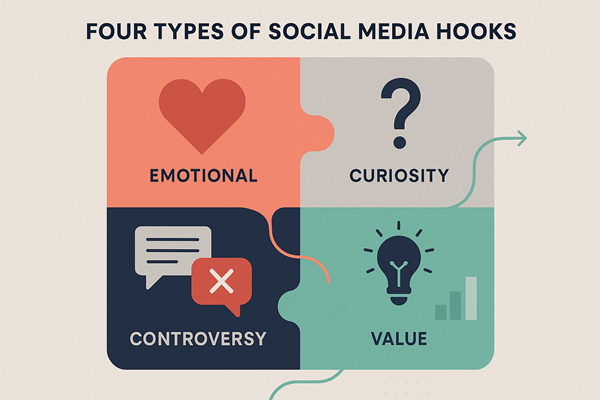
Not all hooks are created equal. Different types work better for different content, audiences, and platforms. Let’s break down the four primary categories.
1. Relatable Hooks 🤝
Relatable hooks work by mirroring your audience’s thoughts, experiences, or quirks. They make viewers feel understood.
When someone sees themselves in your content within the first few seconds, they’re far more likely to keep watching and share it with others who’ll relate too.
Examples:
- “POV: You just spent 3 hours ‘researching’ when you were supposed to be working”
- “Tell me you’re a millennial without telling me you’re a millennial”
- “When you open your banking app and immediately close it”
- “That feeling when you finally understand a concept you’ve been struggling with for weeks”
These hooks work because they create instant connection. Your audience thinks, “Wait, that’s literally me.” That recognition keeps them engaged.
2. Statement Hooks 💥
Statement hooks interrupt the scroll with intriguing, provocative, or shocking declarations. They make bold claims, challenge assumptions, or present information that sparks curiosity and debate.
The key? Don’t reveal everything immediately.
Create tension.
Examples:
- “I made ,000 last month doing something most people think is impossible”
- “This serum works better than the 0 one everyone’s buying”
- “Everything you know about productivity is wrong”
- “I quit my six-figure job and I’ve never been happier”
Statement hooks work best when they challenge conventional wisdom or present surprising information. They make people think, “Wait, what? I need to know more.”
3. Question Hooks ❓
Question hooks encourage immediate interaction by prompting your audience to think about their experiences or opinions. They transform passive viewers into active participants.
The most effective question hooks are specific rather than generic.
Examples:
- “What would you do with an extra ,000 this month?”
- “Ever wonder why some creators blow up overnight while others struggle for years?”
- “Which type of content creator are you: consistent or chaotic?”
- “Want to know the one thing that changed my entire business?”
Questions work because they create a mental pause. The viewer’s brain automatically starts formulating an answer, which means they’re already engaged with your content.
4. Visual Hooks 👁️
Visual hooks rely on compelling opening frames, movements, or visual elements that capture attention before any words are spoken or read.
These are especially powerful on platforms like TikTok and Instagram Reels where the visual component dominates.
Examples:
- Starting with a dramatic transformation (before/after)
- Opening with an unusual or unexpected visual
- Using bold text overlays with high contrast
- Beginning with fast-paced editing or movement
- Showing the end result before revealing the process
Visual hooks are critical for automated short-form video creation because the first frame often determines whether someone keeps watching or scrolls past.
- “This trend is blowing up right now and most creators are missing it”
- “If you’re not doing this yet, you’re already behind”
- “Everyone’s talking about this but nobody’s explaining how it actually works”
- “This changes everything we thought we knew about…”
🎣 Social Media Hook Generator
Create attention-grabbing hooks for your content in seconds
Your Custom Hooks
Proven Social Media Hook Formulas That Work
Now that you understand the types, let’s get tactical. These formulas have been tested across millions of pieces of content and consistently drive engagement.
The Curiosity Gap Formula
This formula creates interest by teasing information without immediately revealing it. You’re essentially opening a loop that viewers want to see closed.
Structure:
- Tease a benefit or outcome
- Withhold the “how” or “what”
- Promise the answer if they keep watching
Examples:
- “This one change increased my engagement by 300%” (doesn’t say what the change is)
- “I’m about to show you something that will change how you create content forever”
- “The secret to viral content is simpler than you think”
This formula works because humans are psychologically wired to seek closure. Once you open that information gap, they need to fill it.
The Pain Point Formula
Address a specific problem your audience faces, then promise a solution. This formula works exceptionally well because it immediately establishes relevance.
Structure:
- Identify a specific pain point
- Show you understand the struggle
- Hint at the solution
Examples:
- “Tired of creating content that nobody sees? Here’s why…”
- “If your engagement has been dropping lately, you’re making this mistake”
- “Struggling to come up with content ideas? I’ve got 30 for you”
The pain point formula is powerful for marketing tips content because it speaks directly to what keeps your audience up at night.
The Numbers Formula
Include specific numbers, statistics, or quantifiable data in your hook. Numbers add credibility and make your content feel more concrete and actionable.
Structure:
- Lead with a specific number
- Make it relevant to your audience
- Create curiosity about how it was achieved
Examples:
- “K in my first month doing this one thing”
- “I tested 47 different hooks—here are the 5 that actually worked”
- “This strategy saves me 10 hours every week”
- “3 simple changes that doubled my followers in 30 days”
Numbers cut through the noise. They’re specific, measurable, and create concrete expectations for what viewers will learn.
The FOMO Formula
Create urgency or exclusivity that makes people feel like they’ll miss out if they don’t pay attention right now.
Structure:
- Highlight time-sensitivity or exclusivity
- Make it feel relevant and valuable
- Create urgency without being manipulative
Examples:
FOMO hooks work best for time-sensitive content like industry trends, product launches, or updates. Just don’t overuse them or they lose their power.
The Identity Trigger Formula
Speak directly to your target audience’s identity, demographics, or life situation. This makes people feel like the content was made specifically for them.
Structure:
- Call out a specific audience segment
- Reference their unique situation
- Promise relevant value
Examples:
- “If you’re a part-time creator trying to grow while working full-time…”
- “Small business owners: this is the content strategy you actually need”
- “For anyone who started their creator journey in the last 6 months”
- “If you’ve been creating content for years but still haven’t grown…”
Identity triggers have higher success rates because they immediately filter for the right audience. People who identify with the description feel compelled to keep watching.
Platform-Specific Hook Strategies
Here’s the truth: what works on TikTok might completely flop on LinkedIn. Each platform has its own culture, format, and user behavior. Your hooks need to adapt.
TikTok Hooks
TikTok is all about that first second. Literally. The platform’s algorithm heavily weighs watch time and completion rate, so your hook needs to be instant and visceral.
Best practices:
- Combine visual and audio hooks simultaneously
- Use text overlays for accessibility and emphasis
- Start with movement or action
- Lead with the payoff, not the setup
- Keep it punchy and energetic
Example hooks:
- “Wait for it…” (with compelling visual setup)
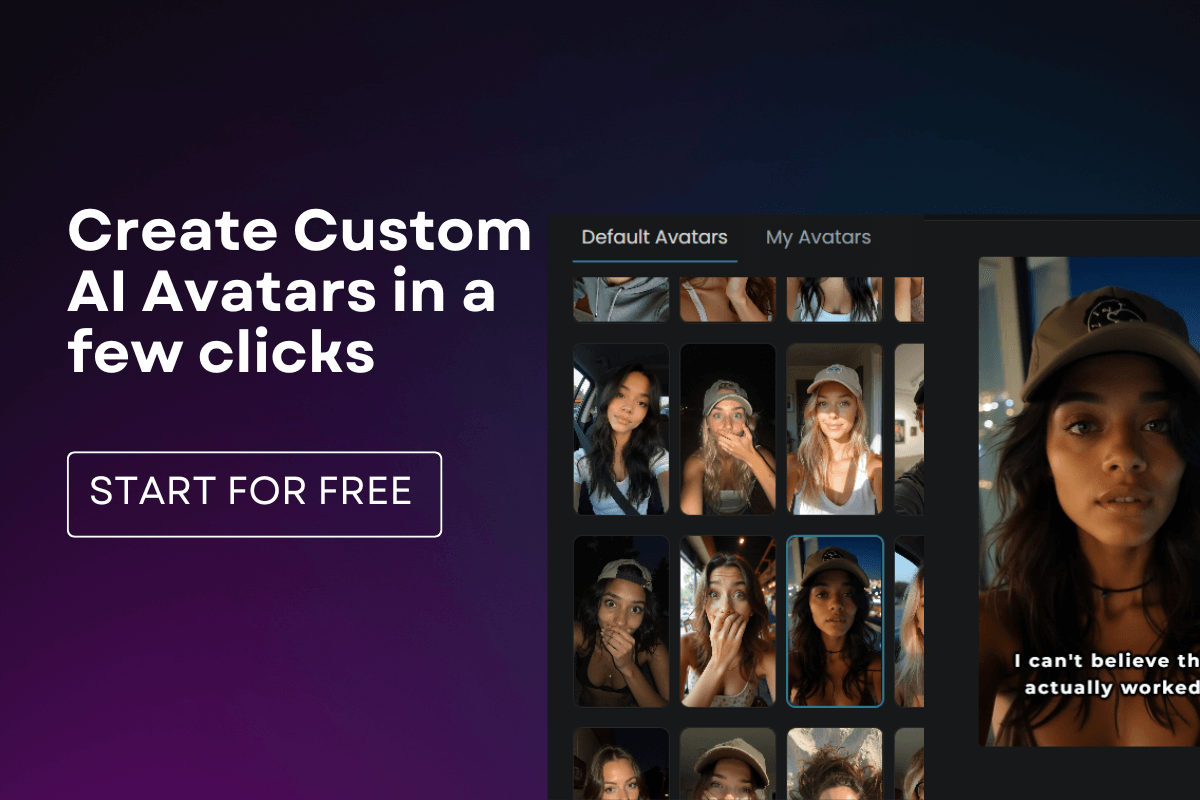
- “I can’t believe this actually worked”
- Starting mid-action with context coming later
- Bold text overlay with surprising statement
For creators leveraging TikTok AI video generation, the first frame and opening text are make-or-break elements.
Instagram Hooks (Reels and Feed Posts)
Instagram requires punchy first lines in captions and strong visual hooks for Reels. The platform’s “see more” fold means your first 1-2 lines of caption text are critical.
Best practices:
- Front-load value in the first line of captions
- Use line breaks strategically to control what shows before “see more”
- For Reels, combine strong visual with text overlay
- Ask questions or make bold statements in opening line
Example hooks:
- “Here’s what nobody tells you about…” (first line)
- “Save this for later—you’ll need it” (creates urgency)
- Opening Reels with transformation or result
Using tools like the Instagram caption generator can help you craft hooks that work within the platform’s constraints.
YouTube Hooks (Shorts and Long-form)
YouTube hooks work across two formats: Shorts (similar to TikTok) and long-form videos (where you have more time but still need to hook quickly).
Best practices for Shorts:
- First frame must be compelling (it’s the thumbnail)
- Use large, readable text overlays
- Create pattern interrupts
- Tease the value immediately
Best practices for long-form:
- Hook in the first 15 seconds
- Use the “preview” technique (show the result, then explain how)
- Create multiple hooks throughout (every 2-3 minutes)
- Thumbnail and title work together as the initial hook
LinkedIn Hooks
LinkedIn is different. The platform favors professional insights, thought leadership, and genuine value. The first two lines of your post appear before the “see more” expansion, making them crucial.
Best practices:
- Lead with a compelling statement or question
- Use line breaks to control what appears above the fold
- Be conversational but professional
- Share insights, not just information
Example hooks:
- “I made a ,000 mistake so you don’t have to.” (first line)
- “After analyzing 1,000 posts, here’s what actually works.” (first line)
- “Most people get this completely wrong:” (first line)
The key on LinkedIn is balancing authority with accessibility. You want to sound knowledgeable without being pretentious.
How to Test and Refine Your Social Media Hooks
Creating great hooks isn’t a one-and-done process. It requires testing, analyzing, and iterating based on what your specific audience responds to.
Track These Metrics
Different platforms provide different analytics, but focus on these key indicators:
- Hook rate: Percentage of people who stop scrolling (watch time in first 3 seconds)
- Average watch time: How long people actually stay
- Engagement rate: Likes, comments, shares relative to views
- Click-through rate: For content with links or CTAs
- Completion rate: Percentage who watch to the end
If your hook rate is low, people aren’t stopping. If watch time drops after the hook, your content isn’t delivering on the promise. Both need to work together.
A/B Testing Your Hooks
Test different hook variations on the same content to see what resonates:
- Same content, different opening lines: Post the same video with different hooks. This could be the highest impact thing you do to increase watch time and engagement.
- Same hook type, different execution: Try multiple question hooks or statement hooks
- Different hook types: Test relatable vs. statement vs. question hooks on similar content
- Platform-specific variations: Adapt the same hook for different platforms
When using automated short-form video creation tools, you can quickly test multiple hook variations without recreating entire videos.
Learn from Your Winners
When a hook performs exceptionally well, analyze why:
- What emotion did it trigger?
- What problem did it address?
- What made it different from your other hooks?
- Can you replicate this formula?
Create a “swipe file” of your best-performing hooks and the patterns you notice. This becomes your personal playbook for future content.
Common Hook Mistakes to Avoid
Even experienced creators make these errors:
❌ Being too vague: “I’m going to share something amazing” tells viewers nothing
❌ Taking too long to get to the point: You have seconds, not minutes
❌ Clickbait that doesn’t deliver: Your content must fulfill the hook’s promise
❌ Using the same hook formula repeatedly: Audiences get hook fatigue
❌ Ignoring platform context: What works on TikTok often fails on LinkedIn
❌ Forgetting accessibility: Add captions and text overlays for sound-off viewing
The biggest mistake? Not having a hook at all. Jumping straight into your content without a strategic opening is leaving engagement on the table.
Advanced Hook Techniques for 2025 and Beyond
As platforms evolve and audiences become more sophisticated, your hook game needs to level up too.
The Pattern Interrupt Hook
This technique works by breaking the expected pattern of content in your niche. If everyone in your space starts videos the same way, doing something different immediately stands out.
Example: If all fitness creators start with “Here’s your workout for today,” you might start with “I’m about to tell you why your workout routine is keeping you from results.”
The Controversy Hook (Use Carefully)
Controversial hooks spark debate and discussion, which algorithms love. But they need to be handled responsibly.
Structure:
- Make a statement that challenges popular opinion
- Back it up with logic or evidence
- Invite thoughtful discussion, not just argument
Example: “Posting every day is actually hurting your growth” (then explain why quality over quantity matters)
The Callback Hook
Reference something your existing audience already knows about, creating an insider feeling that rewards loyal followers while intriguing new viewers.
Example: “Remember that strategy I mentioned last week? Here’s what happened when I actually tried it.”
The Meta Hook
Acknowledge what you’re doing while you’re doing it. This self-awareness can be refreshing and engaging.
Example: “I know you’re tired of seeing ‘how to go viral’ content, but hear me out—this is actually different.”
Putting It All Together: Your Hook Action Plan
You’ve learned the theory. Now here’s how to implement it.
Step 1: Know Your Audience
Before you write a single hook, understand:
- What problems are they trying to solve?
- What goals are they working toward?
- What language and references resonate with them?
- What emotions drive their decisions?
Your hooks should speak directly to these insights.
Step 2: Create a Hook Library
Build a collection of 20-30 hook templates that you can adapt for different content. Organize them by type (relatable, statement, question, visual) and by use case (educational, entertaining, promotional).
Step 3: Match Hooks to Content
Not every hook works for every piece of content. Match your hook type to your content goal:
- Educational content: Question hooks, pain point hooks, numbers hooks
- Entertainment content: Relatable hooks, visual hooks, pattern interrupts
- Promotional content: FOMO hooks, results hooks, transformation hooks
- Thought leadership: Statement hooks, controversy hooks, insight hooks
Step 4: Test Systematically
Don’t just throw random hooks at the wall. Test methodically:
- Week 1: Test 3 different question hooks
- Week 2: Test 3 different statement hooks
- Week 3: Test your top performers against each other
- Week 4: Analyze and refine
Step 5: Iterate Based on Data
Let the numbers guide you. Double down on what works. Abandon what doesn’t. Refine what shows promise.
The creators who win aren’t necessarily the most creative—they’re the most systematic about testing and improving.
Conclusion: Your First Three Seconds Are Everything
Social media hooks aren’t just a nice-to-have element of your content strategy. They’re the difference between content that gets seen and content that gets scrolled past into oblivion.
Here’s what you need to remember:
Master the four types of hooks. These include relatable, statement, question, and visual. And, know when to use each one. Implement proven formulas like curiosity gaps, pain points, specific numbers, FOMO, and identity triggers. Adapt your approach for each platform because what works on TikTok won’t necessarily work on LinkedIn. Test systematically and let data guide your decisions rather than assumptions.
The best part?
You don’t need to be a creative genius to craft compelling hooks. You need to understand your audience, test different approaches, and refine based on what works.
If you’re creating multiple pieces of content regularly, tools like QuickVid can help you produce more videos efficiently, giving you more opportunities to test different hooks and find what resonates with your audience.
Your audience is out there, scrolling right now. The question is: will your hook be strong enough to stop them?